DAO governance
GST is a governance token enabling holders to decide what land is acquired, which individuals and organisations act as the administrators of the DAO and the rules governing all DAO activities. More in the governance section of this document with a detailed explanation in the GST DAO Constitution.
GST ecosystem
DAO land will be managed by a network of Land Stewards who may drive revenue from the sale of goods and services provided on or from conservation projects. We will work with our Land Stewards to provide discounts and utilisation of GST within those business models.
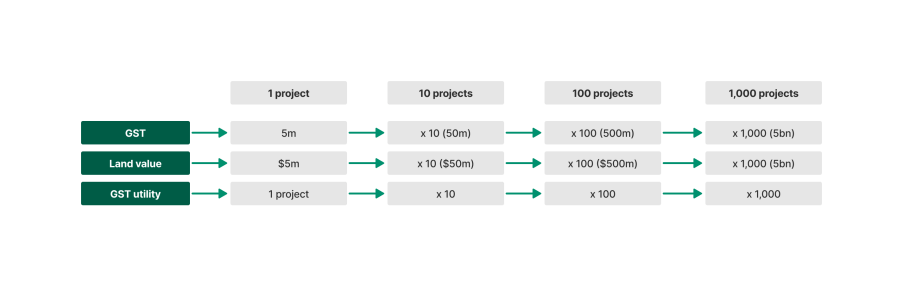
It is our intention that DAO held land will provide real world utility for GST. This is very important to understand the Green Standard system as the underlying asset of GST (land) provides utility for the token (GST). As the DAO acquires more land, the Treasury will mint more GST creating more real-world utility for GST.
In summary the more GST that gets minted, the more utility there is for GST – below is a simple illustration with a set valuation of $1 per 1 GST with a set value per land of $5m:
An example would be an ecotourism lodge that accepts GST as payment for certain goods and services.
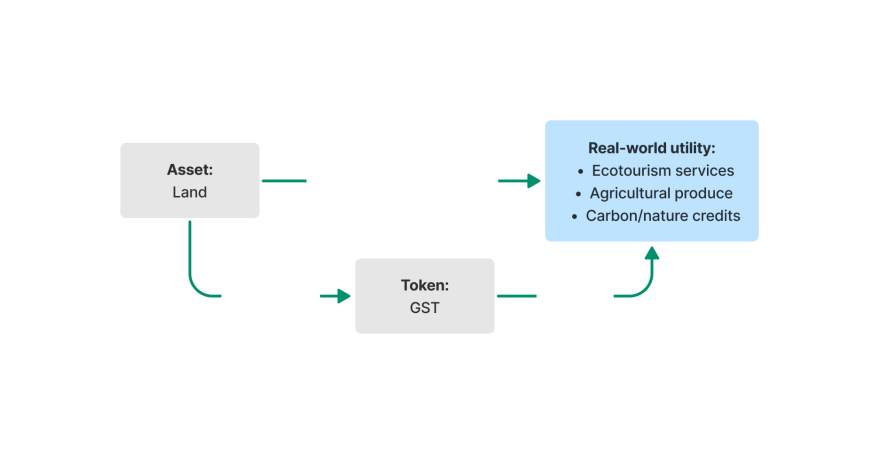
A benefit for our Land Stewards, is a community of potential customers for the goods and services available via their nature-based conservation businesses.
This is a unique benefit to our system which has built in network effects.
GST as dividends
Any dividends due to shareholders in the operational company must be distributed in GST, therefore creating built-in utility for GST within our ecosystem. This also ensures that everything we do, including distributing profits, serves our special purpose and supports the GST ecosystem.
*View section 4.6. for to view the flows of how this works.
You must be logged in to post a comment.